When Consultation Fails: Trust, Silence, and Standing with the Jewish community
Date - 13.3.2026Issue 11 of Community News by Pastor Simon Bhardwaj
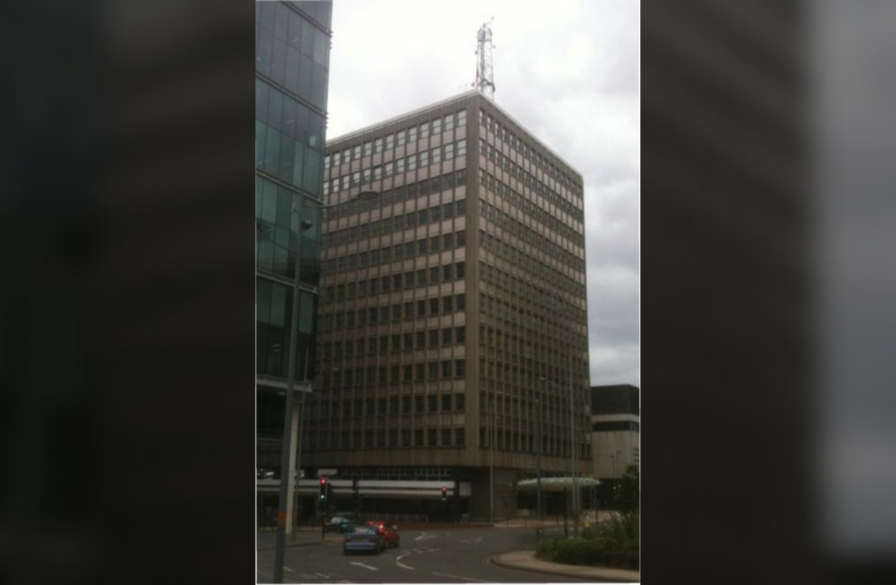
The image above shows Lloyd House on Snow Hill Queensway —the headquarters of West Midlands Police in Birmingham. It is an imposing civic building. Solid. Institutional. Symbolic of authority and public responsibility. Yet buildings do more than house institutions. They represent trust.
Recent events surrounding the Maccabi Tel Aviv fan ban — and the findings of the Home Affairs Select Committee — have prompted deeper questions about consultation, equality, and community confidence. These are not merely operational concerns. They go to the heart of how local government and policing stand with minority communities in moments of tension.
The issue now is not accusation, but accountability. Not division, but clarity. And at the centre of the conversation is a pressing question: How do local authorities visibly and consistently stand with the Jewish community?
Consultation and the Weight of Inclusion
The parliamentary findings highlighted shortcomings in early engagement with Birmingham’s Jewish community. Consultation was delayed. Communication was limited. Perceptions of imbalance emerged.
In civic life, timing matters. Early engagement communicates respect. When consultation appears reactive rather than proactive, communities can feel overlooked.
Reports indicate that police engaged with a prominent mosque leader during discussions surrounding the fixture. Engagement with Muslim leaders is entirely appropriate in a diverse city. Responsible policing requires dialogue across communities.
However, the concern raised is about balance. If a decision directly affected Jewish supporters of an Israeli team, why were Jewish leaders not consulted with equal urgency at the outset?
This question is not about pitting one community against another. It is about parity of dignity. When engagement appears uneven, trust weakens — even if intentions were sincere.
Balanced consultation protects everyone.
Harshness and Perception
Another concern that has surfaced relates to the tone of policing in recent years — not only toward Jewish supporters, but also toward Christians engaged in peaceful expression.
There have been wider national conversations about whether policing sometimes appears firmer with faith communities expressing traditional views, while exercising greater caution in other contexts. Whether this perception is entirely fair or partially constructed, it nonetheless exists.
Perception matters in diverse democracies. If Jewish residents or Christian communities feel that their lawful expression is treated with disproportionate suspicion or strictness, confidence erodes. Policing must be even-handed, visibly so.
The challenge is not to weaken enforcement where necessary, but to ensure that enforcement is demonstrably consistent.
Trust in policing is built when communities believe they are treated fairly, regardless of faith or background.
The Role of Birmingham City Council
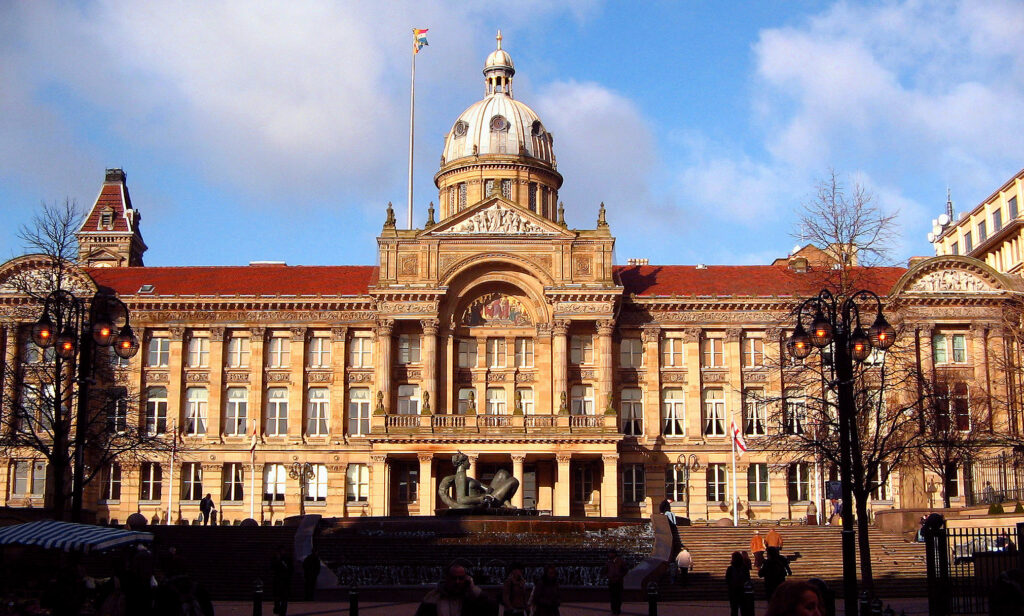
Alongside policing stands Birmingham City Council. Councils shape civic tone. They are custodians of community cohesion.
The question therefore, becomes: how does the council demonstrate its commitment to Jewish residents in practice?
Standing with a community does not require taking geopolitical positions. It requires affirming clearly that Jewish citizens are equal members of the civic family whose safety and dignity are actively protected.
When decisions affect a minority community during heightened tensions, reassurance must be visible.
In previous reflections on civic responses to October 7th in Wolverhampton, it was observed that neutrality can sometimes feel like silence. Authorities may believe they are preventing division. Yet to those seeking solidarity or reassurance, silence can create distance.
The same principle applies here.
If Jewish residents perceive hesitation, limited consultation, or muted support, the emotional impact can be profound — even if no exclusion was intended.
Leadership requires anticipating how decisions will be experienced, not merely how they were intended.
Equality Organisations and the Question of Silence
Perhaps one of the most searching questions concerns the role of local equality and cohesion organisations.
These bodies are often tasked with promoting inclusion, advising councils, and representing minority voices. They speak frequently on issues of discrimination and social justice.
Yet some have asked: where were these voices when Jewish leaders felt overlooked?
It may be that conversations took place privately. It may be that equality organisations sought to calm tensions quietly rather than publicly.
But prolonged public silence can be interpreted as indifference.
If equality bodies speak strongly in certain controversies but appear cautious in others, communities may question consistency. Equality cannot be situational.
It must be principled and predictable.
The credibility of equality organisations depends on their willingness to advocate across all communities equally — including Jewish residents — especially when trust is strained.
Silence may be strategic. But if silence becomes habitual in certain contexts, it undermines confidence.
Challenging the Mind-set Behind procedural failings often lies a deeper mind-set.
There can be an institutional instinct to treat engagement with the Jewish community — particularly in contexts linked to Israel — as politically sensitive terrain. As a result, consultation may be cautious or minimal.
But caution must not become avoidance. If authorities fear that robust engagement with Jewish leaders might appear partisan, they risk under-consulting. Yet under-consultation communicates distance.
True neutrality is not silence. It is balanced engagement and participation.
Likewise, if Christian voices raising concerns about fairness are quickly labelled as controversial, while others are treated as representative stakeholders, perceptions of double standards arise.
These perceptions, whether entirely accurate or not, must be addressed openly.
Healthy civic institutions welcome scrutiny. They examine whether consultation frameworks are transparent, whether engagement is documented, and whether equality is maintained across communities.
These are governance questions, not ideological ones.
Rebuilding Confidence Through Transparency
Trust cannot be restored through statements alone. It requires structural clarity.
Authorities should consider how consultation protocols ensure early engagement with communities directly affected by decisions. Regular liaison forums, documented consultation pathways, and transparent reporting would all strengthen confidence.
Transparency reduces suspicion.
If Jewish leaders know that engagement processes are consistent and timely, trust grows. If Muslim leaders and Christian leaders also see that consultation is balanced and principled, cohesion deepens.
Clarity protects all communities.
Beyond Birmingham
The conversation in Birmingham resonates more widely. In Wolverhampton and elsewhere, debates haven’t emerged about how public institutions respond to sensitive international events and how those responses affect local Jewish residents, unless it is happening behind closed doors.
Communities measure equality not only by written policy but by lived experience.
If patterns appear in which certain communities feel less consulted or less visibly supported, confidence erodes incrementally.
That erosion rarely begins dramatically. It begins quietly — with unanswered emails, delayed meetings, muted statements, and perceived imbalances.
Rebuilding trust requires acknowledging these subtleties.
Standing Clearly Without Division

Pastor David Elms – Director, ICEJ UK
“This is not a call for confrontation, but for clarity and courage. As Christian leaders and citizens, we believe local government and policing have both the opportunity and the responsibility to state clearly how they stand with the Jewish community in times of uncertainty.
Equality organisations must also reflect on whether their advocacy is visibly consistent, and faith leaders should continue to engage respectfully while asking honest and necessary questions.
Balanced challenge does not weaken democracy — it strengthens it. Our cities flourish when every community knows it has an equal place at the table. Neutrality, when wisely practised, can calm tensions.
But neutrality without reassurance can unintentionally create distance and insecurity.
If consultation becomes proactive rather than reactive, if equality is demonstrated consistently rather than selectively, and if policing is firm and even-handed in every context, confidence can be restored.
Authority alone is not enough; authority must be accompanied by trust. And trust grows where transparency and fairness are both practised and clearly seen.
Standing with the Jewish community — and with every community — is not a political gesture. It is a moral responsibility and a mark of principled civic leadership. This is the mindset that must guide our cities in the days ahead.”
Want to be among the first to receive these updates from the ICEJ UK? Sign up for our newsletter by clicking the button below.
Cover image of West Midlands Police HQ by Richardjstanley